 |
 |
|
|
|

|
Part 1
|
Making a Large Vacuum Bag for Veneering
The vinyl can be purchased at any place that makes boat covers or canvas awnings. Some fabric stores also offer it. If you have a difficult time finding vinyl for the bags, it can be purchasd it at VeneerSupplies.com. There are a few different thicknesses available in vinyl membrane sheeting. The most common are 20 mil, 27 mil, and 30 mil. Either will work with similar results, but thicker material is typically more durable. Polyurethane bagging material is also available but, if you are building your first vacuum bag then consider building it from vinyl instead. Though the polyurethane will last longer, it is more expensive and can be more difficult than vinyl when making a DIY bag. The time involved in building a polyurethane vacuum bag offsets any savings over buying one pre-made for most people. The instructions below will work with vinyl or polyurethane.
Tools and Parts
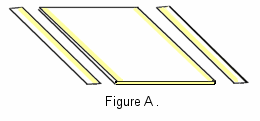
Large or Square Vacuum Press Bags For this example, we will build a bag that is about 4' x 4' square. First, get a 9' (or 108") length of 54" wide vinyl and fold it in half so you have a doubled over piece that is 54" x 54". On one side of the vinyl, use a pen to mark a straight line 4" from the edge from the folded end to the opposite end.
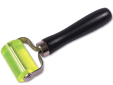
For large bags such as this, you will need an assistant for 10 minutes. Apply the vinyl cement in the area between the pen lines (on the inside of the crease). Allow the cement to set up for 2 minutes then fold the bag neatly in half again. It is important that the bag is folded evenly in half. It's probably best to do a practice run of the folding step before you apply the cement. If you find that the vinyl is difficult to manipulate when folding, you can toss a bit of baby powder into the inside of the fold. The vinyl will slide around a bit easier this way. After the vinyl has been folded over, use a seam tool to press the vinyl cemented area flat. You may need to continue pressing this area for several minutes until the cement fully bonds. The critical areas are at the corners. This area must lay flat and be sealed tightly. You can use wood clamps to hold the corners tight until the cement cures. If you have opted to use polyurethane material, you'll need to clamp the edges together with a couple of flat boards and some spring clamps for 24 hours. On the left and right side of the vinyl bag, use acetone or xylene to clean the outer 2" edges of the bag. Also clean one entire side of each of the two strips that you cut from the original piece of vinyl. Allow this to dry for a few minutes.
And again, if you have opted to use polyurethane material, you'll need to clamp the edges together with a couple of flat boards and some spring clamps for 24 hours. Making the Bag Air-Tight Set up your bag and attach it to the system. Place the platens in the bag. Clamp the bag shut, and turn on the press. When at least 18” of Hg is achieved, use the vinyl cement to "paint" the edges of all previously sealed seams. Like magic, the cement will be pulled into any leaks. You might even hear the seam bubbling, and then just stop within seconds as the cement fills the void. Turn the unit off and let the cement cure over night. A second application of cement may be necessary.
|










 |
 |
|
 |
 |
 |